Hebei Tengwei Steel Structure Co., Ltd.
-
+8615130716666
-
wrl1054131882@qq.com


Pipe Truss Manufacturer: What Buyers Should Confirm Before Ordering
Selecting a pipe truss manufacturer requires more information than sending a roof span and asking for a price. Pipe truss fabrication depends on project geometry, support conditions, member configuration, node details, material requirements, loads defined by the project design, surface requirements, transportation limits and site assembly conditions.
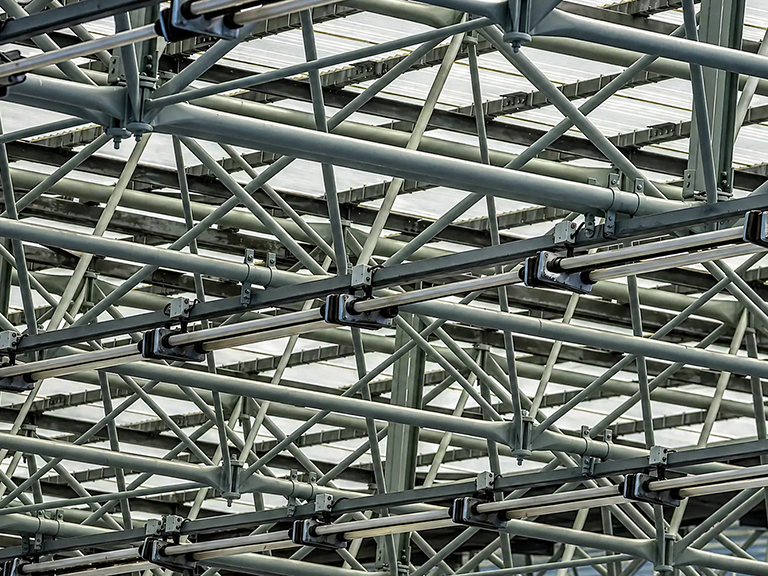
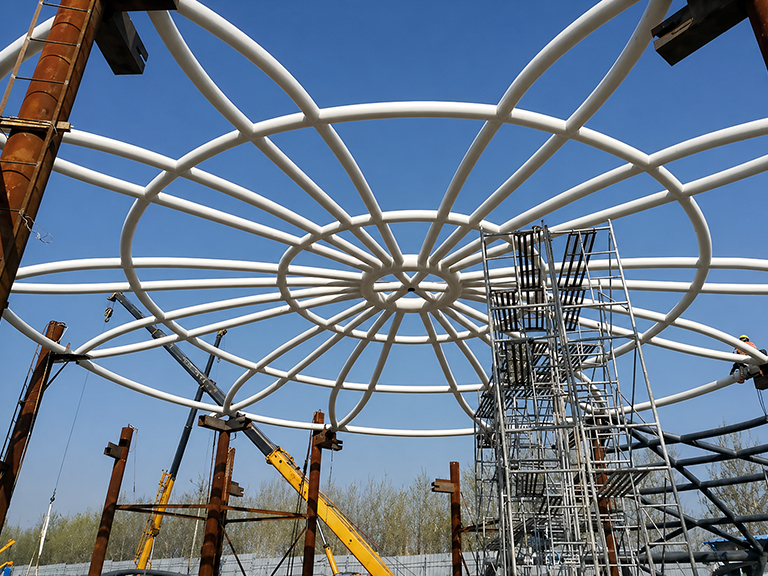
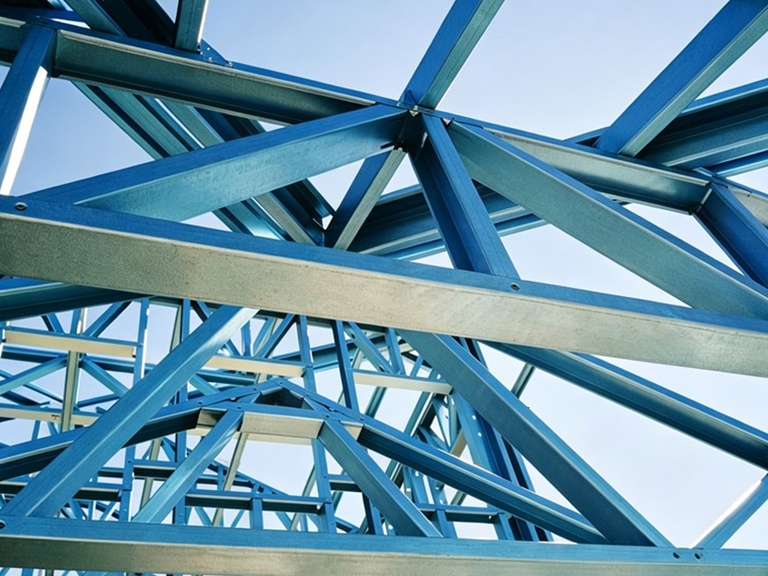
A photograph can show the general appearance of a pipe truss, but it cannot provide enough information for project-specific fabrication. Two structures with a similar visual form may have different support arrangements, node geometry or member requirements.
For contractors and project buyers, the first objective should be to define the engineering and supply information that the manufacturer must follow.
Start With the Pipe Truss Geometry
The manufacturer needs the actual project geometry rather than only a general description such as large-span roof truss.
Depending on the project, important information can include:
– Overall span
– Truss depth or profile
– Support locations
– Roof or structure geometry
– Required elevations
– Member arrangement
– Connection points
– Interfaces with columns or other structures
These values should come from the approved project documents.
If geometry is still changing, the buyer should identify which dimensions are preliminary.
Do not treat an early concept drawing as a final fabrication drawing.
Provide Project Load and Design Requirements
The pipe truss configuration should correspond to the project design requirements.
Buyers should provide the design information that the fabricator needs rather than asking the manufacturer to copy a truss from another project.
Requirements may depend on:
– Building application
– Structural design
– Local project conditions
– Support arrangement
– Connected systems
– Project-specific loads and design criteria
The exact engineering values should be taken from the project documents.
If the buyer does not yet have confirmed design information, the requirement should be evaluated before final fabrication details are released.
Do not select member sizes solely from span length.
Span is only one part of the structural requirement.
Node Details Need to Match Fabrication
Pipe trusses contain multiple intersecting members, making node information particularly important.
The production team needs clear geometry for the joints and connections used in the actual project.
Before fabrication, confirm:
– Node locations
– Member orientation
– Connection geometry
– End conditions
– Support nodes
– Connection to adjacent structures
– Required plates or connection components
– Any bolt or welding details specified by the project
A node that appears simple in a rendering may require precise fabrication information.
When details remain unresolved, they should be clarified before cutting and assembly.
Confirm the Pipe and Member Specification
Buyers should provide the required material and member information from the design.
Do not assume that every pipe truss uses the same pipe size, wall thickness, cross-section or steel specification.
A project may contain different member groups with different requirements.
Specification Checklist
– Material requirement
– Member cross-section
– Member dimensions
– Required wall thickness where specified
– Member identification
– Surface treatment
– Connection requirements
Each value should correspond to the current project documents.
If a manufacturer proposes an alternative, it should be reviewed against the project requirements before approval.
Consider How the Truss Will Be Transported
Large pipe trusses can create transportation and handling questions.
The buyer should provide the project destination and any known shipping restrictions early enough for fabrication planning.
Questions include:
– Can the complete truss be transported?
– Does the structure need transportable sections?
– Where will site assembly take place?
– What lifting conditions are available?
– Is storage space limited?
– Does the shipment sequence need to follow the erection sequence?
If segmentation is required, the division points and site connections must remain consistent with the structural design.
A truss should not simply be divided wherever transportation appears convenient.
Plan the Interface With Columns and Supporting Structures
Pipe trusses rarely operate as isolated components.
They connect to columns, supporting frames or other structural systems.
Before production, the project team should verify:
– Support coordinates
– Support elevations
– Connection directions
– Bearing or connection locations
– Interface dimensions
– Adjacent steel member positions
– Installation clearance
This is especially important if the pipe truss and supporting steel are purchased from different suppliers.
Each party should know which dimensions and connections it is responsible for confirming.
Define the Supply Scope
A pipe truss manufacturer may quote only the truss itself or a larger package of supporting steel components.
The buyer should define the boundary clearly.
Possible scope items include:
– Pipe truss fabrication
– Supporting columns
– Connection components
– Secondary steel
– Surface treatment
– Packaging
– Delivery
– Installation guidance
Hebei Tengwei Steel Structure Co., Ltd. produces pipe trusses as part of a broader product range that also includes light steel structures, heavy steel structures, bridge steel structures, lattice columns, purlins, floor decks and color steel sheets.
For projects requiring multiple steel component types, the buyer can define which products are expected within the same supply package.
Check Fabrication Information Before Production
A useful pre-production review checks whether the fabrication team has all information needed for the released scope.
Before Ordering Checklist
– Approved geometry
– Project design requirements
– Material specification
– Member dimensions
– Node details
– Support conditions
– Connection requirements
– Surface requirements
– Component identification
– Required quantity
– Destination
– Transport restrictions
– Site assembly conditions
If an item remains uncertain, record it as pending technical confirmation.
This is better than allowing production to proceed from assumptions.
Common Mistakes When Buying Pipe Trusses
Choosing a truss from appearance alone
A photograph does not define structural geometry or design requirements.
Providing only the span
Span alone does not determine the complete member configuration.
Ignoring node details
Node geometry affects fabrication and site connection.
Failing to coordinate supports
The truss must interface correctly with the supporting structure.
Deciding transport segmentation after fabrication
Transportation requirements should be considered earlier.
Copying member sizes from another project
Different projects may have different geometry, supports and design requirements.
Comparing quotations with different supply scopes
A truss-only quotation and a broader steel package are not directly equivalent.
FAQ
What information should I send to a pipe truss manufacturer?
Provide project drawings, span and geometry, support conditions, material and member requirements, node or connection information, quantity, surface requirements and delivery destination.
Can a pipe truss be quoted from span alone?
A span can support an early discussion, but it does not define the complete project-specific truss configuration.
What affects pipe truss member selection?
Member requirements should follow the structural design, geometry, supports, project loads and other project-specific conditions.
Should transportation be considered before fabrication?
Yes. Large components may need transport planning before the final fabrication arrangement is confirmed.
Can pipe trusses be supplied together with other steel structure components?
Hebei Tengwei Steel Structure Co., Ltd. supplies pipe trusses together with a broader range of steel structure products. The exact package should be defined for each project.
What should be confirmed before production starts?
Confirm the approved drawings, geometry, member specifications, nodes, supports, connections, surface requirements, quantity and delivery conditions.
Conclusion
A pipe truss should be ordered from project information rather than from a catalog image or span value alone.
The buyer should confirm geometry, design requirements, materials, member dimensions, nodes, support conditions, interfaces, surface requirements, transportation and supply scope before fabrication.
Hebei Tengwei Steel Structure Co., Ltd. specializes in steel structure fabrication and project-based supporting services and supplies pipe trusses for steel structure and infrastructure applications.
For a pipe truss inquiry, prepare the latest project drawings, required quantity, structural geometry, support information, member requirements, destination and expected supply scope. These details give the manufacturer a more reliable basis for technical review and quotation.